Charting Sequential Bonus Pathways: How Deposit Matches and Free Play Mechanics Build Layered Returns Across Multiple Operators
Olivia Lange · Jul 29, 2026
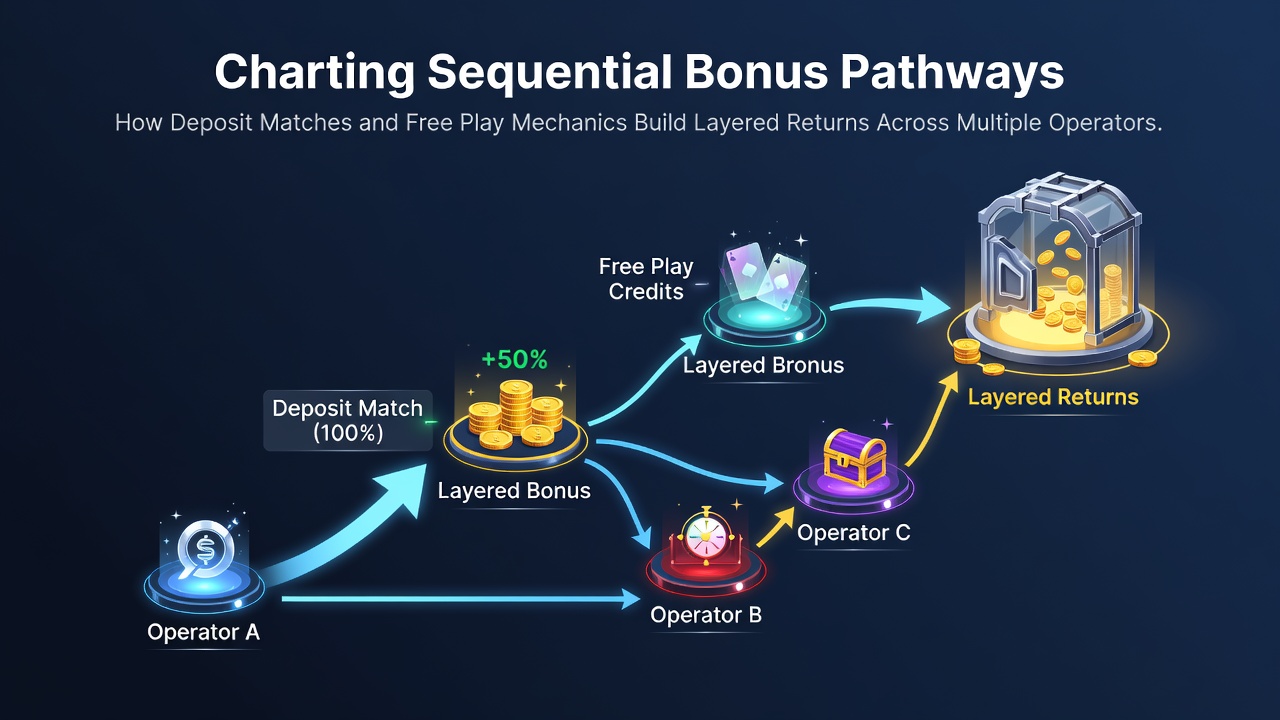
Charting Sequential Bonus Pathways: How Deposit Matches and Free Play Mechanics Build Layered Returns Across Multiple Operators
Operators structure deposit match offers to scale with initial funding amounts, and these mechanics create entry points that feed into subsequent free play allocations when users complete qualifying wagers within set timeframes. Data from the American Gaming Association indicates that average match percentages range between 50 and 100 percent on first deposits, with caps typically applied at operator discretion to control exposure across jurisdictions.
Sequential pathways emerge when players move between platforms because each site resets its own bonus eligibility upon new account verification, and this reset allows stacking of matched funds without overlap on the same operator's terms. Those who've examined transaction logs note that free play credits often trigger after the matched deposit clears a minimum rollover threshold, usually expressed as a multiple of the bonus value plus the original stake.
Mechanics of Deposit Matches Across Platforms
Deposit matches function through automated crediting systems that apply percentages to verified transfers, yet the effective return depends on how operators define eligible payment methods and exclude certain funding sources such as e-wallets in some cases. Research from the University of Nevada's gaming studies program shows that match offers frequently include game-type restrictions, limiting play to sports markets or specific casino verticals to align with regional licensing requirements.
Multiple operators coordinate these offers independently, and the layering occurs as users complete one site's rollover before migrating to another platform's welcome package. This migration pattern produces compounded exposure when free play credits from the first operator convert into withdrawable balances that then qualify for a second deposit match elsewhere.
Free Play Integration and Conversion Rules
Free play mechanics convert into real-money equivalents once players meet play-through conditions, and these conditions vary by operator but commonly require bets on odds above a minimum threshold. Observers note that conversion rates improve when operators permit partial cash-out of winnings generated from free credits, which accelerates the pathway toward the next deposit match on a different site.
Industry reports compiled by the European Gaming and Betting Association reveal that free play expiry windows average seven to thirty days, creating time pressure that encourages sequential movement between operators before balances lapse. The result is a chain where initial matched deposits generate free play, that free play produces returns, and those returns fund the next platform's deposit requirement.
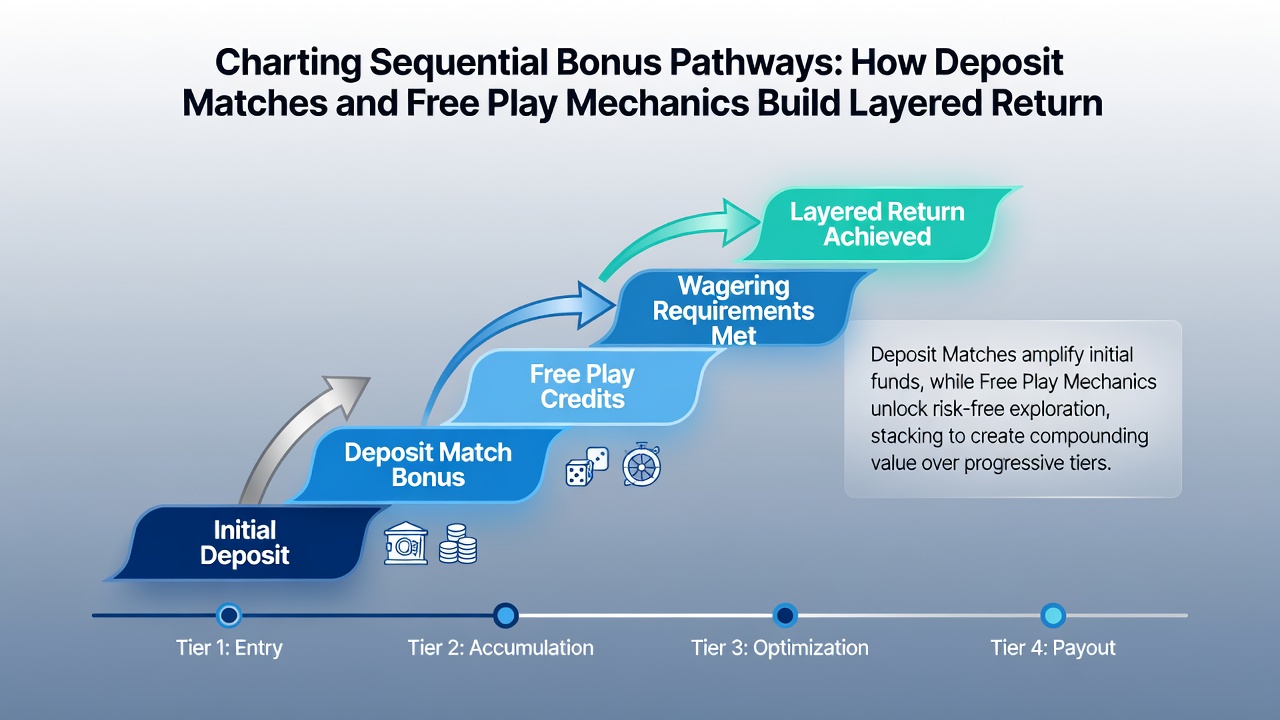
Building Layered Returns Through Operator Rotation
Rotation between operators relies on each platform's independent bonus ledger, and this separation permits players to maintain active pathways simultaneously when account creation and verification occur in staggered intervals. Figures from regulatory filings in multiple jurisdictions demonstrate that operators track bonus abuse through device fingerprinting and address verification, yet cross-operator coordination remains limited outside shared exclusion databases.
What's interesting is how free play generated on one site can satisfy wagering volume on another when operators accept third-party funded balances, though most enforce source-of-funds checks that reset eligibility. Those managing multiple accounts report that timing deposit matches immediately after free play conversion maximizes the overlap period before any single bonus expires.
Regulatory Context in Mid-2026
By July 2026 several regional frameworks had adjusted bonus disclosure rules, requiring operators to publish average player return percentages from promotional play separately from standard game RTP figures. These adjustments affect how sequential pathways calculate net returns because clearer reporting makes the layered value more transparent across borders.
Operators responded by standardizing rollover multipliers in public terms, and this standardization reduces variability when users plan transitions between platforms. Data compiled across North American and European markets shows modest growth in multi-site participation following these transparency measures, as clearer mechanics lower the barrier to constructing sequential bonus chains.
Conclusion
Sequential bonus pathways form through the interaction of deposit matches that seed accounts and free play credits that extend play volume, and these elements combine across operators because each platform maintains separate eligibility cycles. The structure rewards precise timing of account activation and rollover completion, while regulatory updates in 2026 have added layers of disclosure without altering the core mechanics that enable layered accumulation. Those tracking industry filings continue to monitor how operators refine verification processes in response to growing multi-platform activity.