How Minimum Odds Thresholds Influence Profit Margins in Free Bet Matching
Riley Simmons · Jul 24, 2026
How Minimum Odds Thresholds Influence Profit Margins in Free Bet Matching
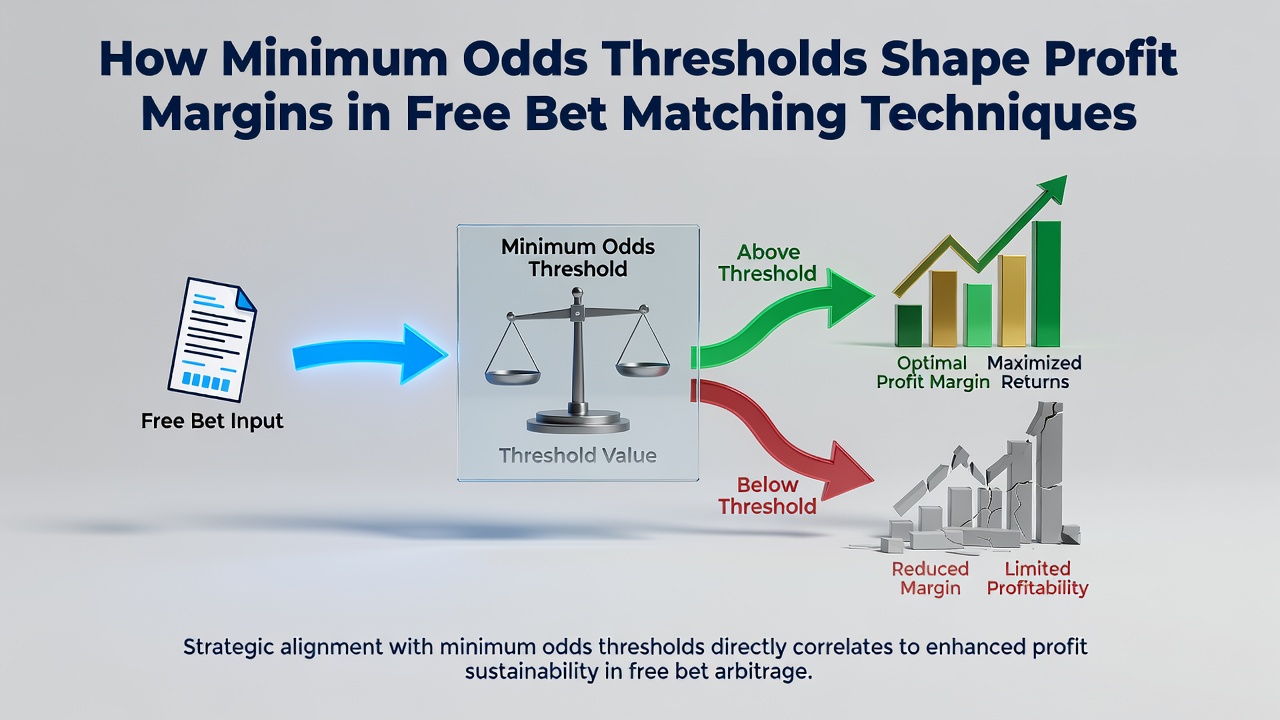
Minimum odds thresholds appear in many bookmaker free bet promotions, and they directly alter how profit margins develop during matched betting sequences. These requirements set a floor on the odds for the qualifying bet, which changes the lay stake needed at the exchange and shifts the overall return structure. Observers note that when a free bet carries a minimum odds requirement of 2.0 or higher, the back bet must clear that level before any profit calculation begins, and this constraint flows through to the hedging step on the exchange side.
Mechanics of Thresholds in Free Bet Plays
Bookmakers apply these thresholds to control how customers use their promotional funds, and the effect shows up in the required stake size for the lay leg. A free bet at odds of 3.0 demands a larger exchange lay to balance the position compared with a lower threshold at 1.8, and that adjustment reduces the percentage margin retained after both sides settle. Research from industry reports indicates that operators introduced stricter minimums throughout 2025, with further refinements appearing in July 2026 as platforms adjusted bonus structures ahead of seasonal demand spikes.
Those who track these changes find that the threshold forces bettors to select events with sufficient price movement, which narrows the pool of available matches and alters the expected value per cycle. When the minimum sits at 2.5, for instance, the qualifying bet often lands on less liquid markets where odds fluctuate more, and this volatility carries into the final profit figure once the lay completes.
Impact on Stake Sizing and Return Percentages
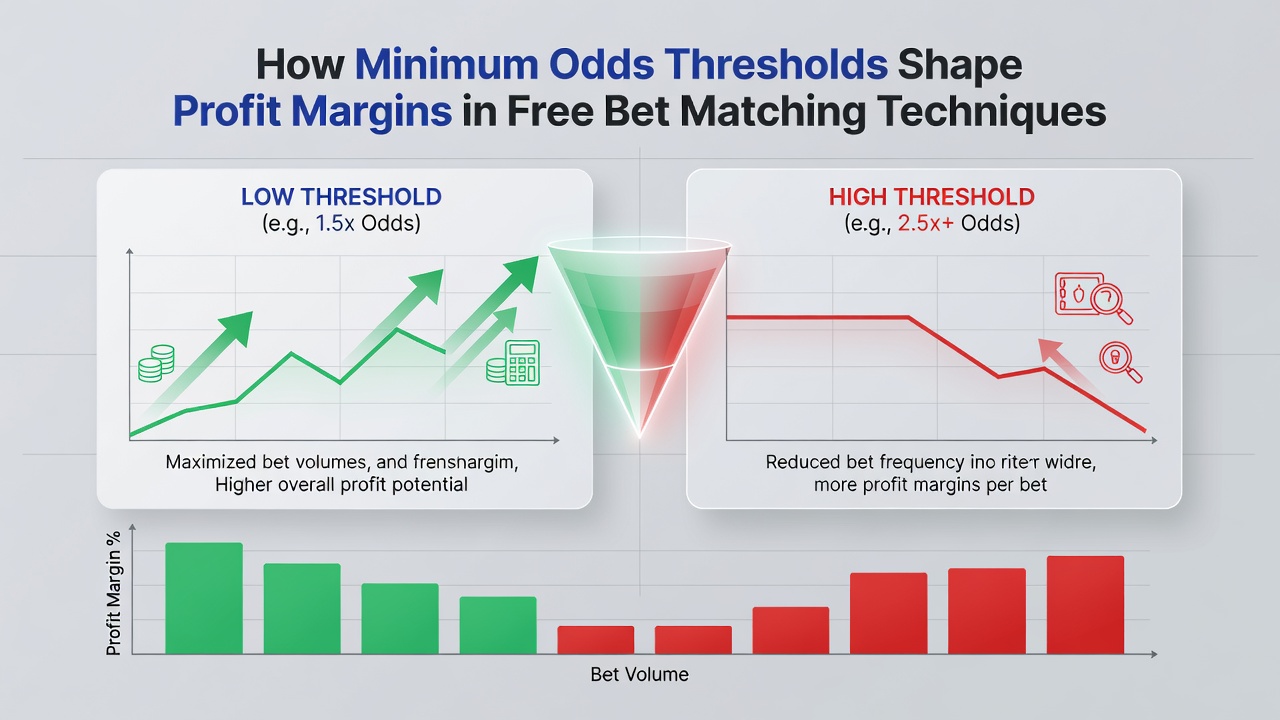
Stake calculations shift because the exchange lay must offset the full free bet amount plus any implied liability at the higher odds. Data from matched betting tracking platforms shows that raising the threshold from 1.5 to 2.0 typically lowers the net margin by 8 to 12 percent across a standard £50 free bet, while thresholds above 3.0 compress margins further when exchange commissions remain fixed. The relationship holds because higher odds require proportionally larger lay stakes, and those stakes incur greater commission costs that eat into the locked profit.
People who run repeated cycles observe that the margin erosion compounds when multiple free bets stack within the same promotional window. A sequence that begins with a 2.0 threshold might deliver a 65 percent effective return, yet the same sequence at a 4.0 threshold often settles closer to 48 percent once exchange fees apply. Figures from European operators confirm this pattern across several major platforms during the first half of 2026.
Market Selection and Liquidity Considerations
Minimum odds rules push matched betting activity toward specific event types where prices reliably exceed the threshold. Football accumulator legs and tennis outright markets frequently satisfy these conditions, whereas lower-odds favourites in American sports fall outside the usable range. According to analysis released by the European Gaming and Betting Association, operators saw a 15 percent shift in free bet redemptions toward higher-odds selections during the spring of 2026, coinciding with threshold adjustments on several UK-facing sites.
Exchange liquidity also plays a role because larger lay stakes at elevated odds encounter wider spreads on less popular events. Those spreads add slippage that further trims the final margin, and the effect becomes measurable when free bet values exceed £100. Operators have responded by tightening the eligible market lists, which narrows options but stabilises the calculation environment for users who stay within the approved selections.
Adjustment Strategies Across Different Threshold Levels
Participants adapt by recalibrating their lay percentages and timing entries around peak liquidity windows. When a promotion sets the bar at 2.0, a standard 95 percent lay coverage often suffices, yet at 3.5 the same coverage leaves residual risk that requires an extra buffer stake. Reports compiled by the University of Nevada Gaming Research Center document how these buffers reduce net returns by measurable amounts across large sample sets collected in early 2026.
Seasonal patterns matter as well. July 2026 saw several bookmakers raise minimums ahead of major summer tournaments, and the resulting margin compression appeared consistently in tracking data from that period. Users responded by spreading qualifying bets across multiple accounts to capture the best available odds above each threshold, which preserved some of the lost percentage points through diversification.
Conclusion
Minimum odds thresholds function as a structural control within free bet promotions, and their influence on profit margins operates through direct changes to lay stake requirements and market availability. The relationship between threshold level and retained percentage remains consistent across observed cycles, with higher floors producing lower net returns once exchange costs apply. Operators continue to refine these parameters, and the adjustments that surfaced in July 2026 illustrate how small shifts in the minimum produce measurable effects on overall profitability for matched betting sequences.